

Grand Rapids homes face two very different climates every year. Subzero polar vortex winters give way to increasingly hot, humid summers, and most local homes, especially those built before modern energy codes, are not properly insulated for either. Plus, with heating and cooling making up the largest share of a home’s energy use, an under-insulated, leaky building envelope makes the furnace and the AC work harder all year long. The solution is not a winter fix or a summer fix; it’s one properly built thermal envelope.
Grand Rapids is labeled as a cool-humid climate with clearly defined heating and cooling seasons. ENERGY STAR and the U.S. Department of Energy (DOE) recommend R-49 to R-60 attic insulation for under-insulated homes in this zone, paired with air sealing of the attic floor, rim joists, and other leakage points. This guide explores how to properly insulate and air seal a home in our climate zone to address both Michigan extremes.
Why Climate Zone 5A Defines a Grand Rapids Home’s Insulation Strategy
Grand Rapids and Kent County sit in IECC Climate Zone 5A, classified as a cool humid region by the DOE. This region is marked by its significant heating demand and real summer cooling season. This means insulation in western Michigan gets judged on two tests every year: holding conditioned heat through extended subzero stretches in winter, then pushing back against attic heat gain and humidity on blistering summer days. And lake-effect weather throws in a moisture dimension too, that can include freeze-thaw cycles, wind-driven snow, and humid summer air that all push moisture at the building envelope.
For R-value Michigan attic targets, ENERGY STAR recommends that Michigan climate zone 5A insulation should fall between R-49 to R-60 attic insulation for under-insulated attics. Floors over unconditioned spaces, rim joists, and basement walls should also be assessed for proper ENERGY STAR insulation recommendations. Remember, the same R-value that slows heat escaping in January also slows heat entering in July, which is why “year-round” insulation is the right frame of mind.
Winter Performance — Holding Heat Through a Polar Vortex
Heated air rises and escapes through an under-insulated attic, while cold air gets pulled in low through rim joists, basement walls, and gaps around penetrations. This pattern, called the stack effect, is why a home can feel drafty even with the furnace running nonstop.
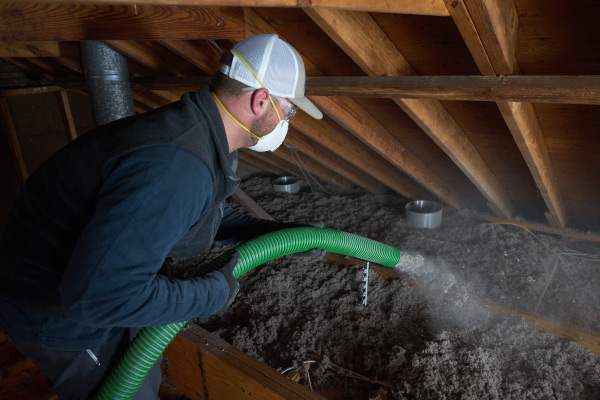 Air sealing Michigan home projects should come before adding insulation, through sealing attic-floor penetrations, top plates, rim joists, and around chimneys and flues. Air sealing is a cost-effective way to cut heating and cooling costs. It is estimated that homeowners can save up to 15% on energy costs when they combine air sealing with added insulation, and not insulation alone.
Bringing attic insulation that Grand Rapids homeowners rely on up to R-49 to R-60 is typically one of the most important upgrades for an older home. It also can help reduce ice dam risk by keeping warm attic air from melting roof snow that refreezes at the eaves. For more ways to cut winter energy use, check out these Michigan energy saving tips.
Summer Performance — Keeping Heat and Humidity in Check
On a steamy 90° July afternoon, an attic under a dark shingle roof runs far hotter than the outdoor air. With thin attic insulation, heat radiates down through the ceiling while the air conditioner runs longer to compensate. The same R-49 to R-60 attic insulation that holds furnace heat in during January slows that downward heat flow in July, so one upgrade handles both seasons. Air leaks also work in reverse, letting humid outdoor air infiltrate where conditioned air escapes.
In our humid summer climate, managing moisture matters as much as R-value. Vapor-permeable insulation materials like fiberglass and cellulose allow wall assemblies to dry rather than trap moisture, helping mitigate the risk of mold and mildew.
To compare: Winter calls for holding in heat, blocking infiltration, and controlling ice-dam conditions. Summer calls for keeping attic heat out, blocking moisture, and letting assemblies dry. One well-built envelope handles both.
Matching Material to Location in a Michigan Home
Attic
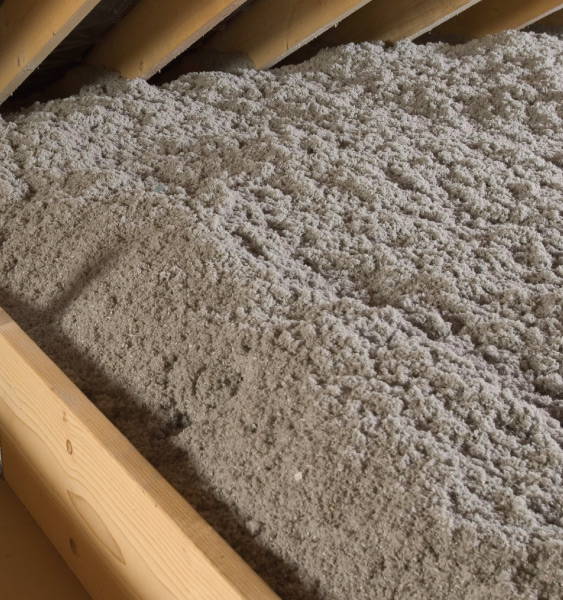 Blown-in fiberglass insulation and cellulose insulation for Michigan homes are the best fit for reaching R-49 to R-60 in zone 5A. Make sure insulation is installed after the attic floor is air sealed.
Rim Joists, Michigan Basements, and Hard-to-seal Areas
Spray foam insulation insulates and air seals in one application. This makes spray foam insulation a product Grand Rapids homeowners can trust as a top choice for Michigan basement insulation, crawl space perimeters, and irregular cavities where air leakage is the core issue.
Walls
Dense-pack blown-in fiberglass or cellulose is ideal for existing walls. Insulation is installed through small access holes, without demolition, to improve cavity R-value. Consider taking a whole-home approach by assessing insulation levels and leakage points before choosing materials, rather than one area in isolation.
Frequently Asked Questions
Q: What R-value do I need for an attic in Michigan?
Grand Rapids is in IECC Climate Zone 5A. ENERGY STAR recommends R-49 to R-60 for attics in this climate zone. Many older Michigan homes have only a fraction of that, making attic top-offs one of the highest-return upgrades.
Q: Does insulation help in the summer, too?
Yes. The same attic insulation that helps keep furnace heat inside during winter slows superheated attic air from radiating into living spaces in summer.
Q: What is the best insulation for Michigan homes?
It depends on the location. Blown-in fiberglass or cellulose suits attics and walls best, while spray foam excels at rim joists, Michigan basements, and areas needing sealing and insulation in one step.
Q: Should I air seal before adding insulation?
Yes. Air sealing first ensures insulation performs at its rated value. ENERGY STAR’s estimated 15% savings figure on heating and cooling costs is based on sealing and insulation together.
Q: Why do my rooms feel drafty even with the furnace running?
Usually, it’s air leakage, not the furnace. The stack effect draws cold air in through ground-level leakage points like rim joists and basements, while warm air escapes through the attic. Both insulation and air sealing are needed to break the cycle.
One Fix for Every Michigan Season
Michigan weather doesn’t let a home specialize. The same building envelope that survives a polar vortex home insulation test in January must handle a humid 90° afternoon in July. Thankfully, one fix covers both. Air sealing combined with insulation built to Zone 5A targets performs in both directions, every season. Remember to start where the return is highest: usually the attic, then rim joists, and the basement. And to choose the materials that best match each location’s job.
At Whitson Insulation Company of Grand Rapids, we have been creating comfortable, energy-efficient homes across western Michigan since 1978. Our team can pinpoint exactly where your home falls short of Zone 5A targets, so we can create a tailored insulation solution to prepare it for the next season. Contact us today to schedule a free estimate.
References
ENERGY STAR. “Methodology for Estimated Energy Savings from Sealing and Insulating.” U.S. Environmental Protection Agency, www.energystar.gov/saveathome/seal_insulate/methodology.
ENERGY STAR. “Recommended Home Insulation R–Values.” U.S. Environmental Protection Agency, www.energystar.gov/saveathome/seal_insulate/identify-problems-you-want-fix/diy-checks-inspections/insulation-r-values.
Gibb, Terry. “Improving Home Insulation for Savings and Comfort: Part 4.” Michigan State University Extension, 10 Nov. 2014, www.canr.msu.edu/news/improving_home_insulation_for_savings_and_comfort_part_4.
U.S. Department of Energy. “Air Sealing Your Home.” Energy Saver, www.energy.gov/energysaver/air-sealing-your-home.
U.S. Department of Energy. “Building America Climate-Specific Guidance.” Office of Energy Efficiency and Renewable Energy, www.energy.gov/cmei/buildings/building-america-climate-specific-guidance.
U.S. Energy Information Administration. “Use of Energy in Homes.” U.S. Department of Energy, www.eia.gov/energyexplained/use-of-energy/homes.php.