
Every insulation product gets marketed as “the best,” but generic advice rarely accounts for where you actually live. Grand Rapids sits in IECC Climate Zone 5A, a cold/humid environment with long winters, heavy heating and cooling loads, and seasonal humidity swings. Install the wrong material, or the right one in the wrong place, and you will pay for it in higher energy bills and moisture problems inside your wall or attic assembly.
The good news: cellulose insulation is well-suited to Grand Rapids homes. It delivers roughly R-3.1 to R-3.8 cellulose R-value per inch and is made primarily from recycled paper treated with borate fire retardants. This guide covers how Climate Zone 5A shapes your insulation decision, where cellulose performs best, and how it compares to other common materials.
Why Grand Rapids’ Climate Zone 5A Defines the Cellulose Decision
Kent County and the southern half of Michigan reside in IECC Climate Zone 5A and its cold/humid conditions. Your climate zone 5A insulation strategy must manage both heat flow and moisture, not just heat flow. Space heating accounts for over half the energy use in Michigan homes, and proper insulation reduces both energy costs and your carbon footprint.
R-Value Targets for Zone 5A
Michigan follows the 2015 Residential Energy Code, based on the 2015 IECC, which sets minimum requirements for new construction. Those minimums are a starting point, not the ceiling. ENERGY STAR’s more up-to-date recommended IECC Zone 5A R-value targets for existing wood-framed homes are:
- Attic: R-49 to R-60
- Floor: R-25 to R-30
- Wall cavity: R-20 or 13 + 5 continuous insulation, depending on framing
- Crawl space/basement wall: R-15 continuous or R-19 batt
Most Grand Rapids homes built before 2010 fall short of these targets. This is why adding attic insulation and air sealing is one of the highest-return upgrades Michigan homeowners can make.
The Moisture Variable
In a cold/humid zone, air sealing and insulation in Michigan homes must work together. R-value alone does not protect against air leakage and vapor movement through Michigan’s freeze-thaw cycles. A material that performs well in a dry climate can fail to manage moisture in a humid one, and even a good material installed without air sealing will not reach its rated performance in a cold, damp winter. Effective insulation addresses both heat flow and moisture.
What Cellulose Insulation Is — and Where It Performs Best
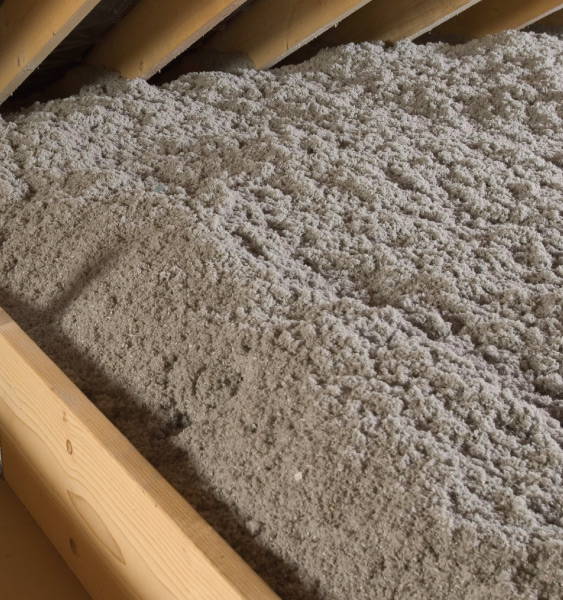
Cellulose is a loose-fill insulation made from recycled paper fiber treated with borates for fire resistance and pest deterrence. Cellulose’s R-value per inch is approximately R-3.1 to R-3.8 per inch, comparable to fiberglass and slightly below spray foam.
Installation Methods
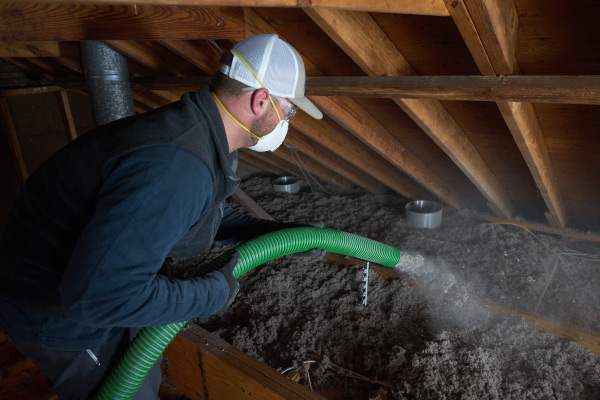
- Blown-in (loose-fill): Sprayed into open attic floors or existing closed wall cavities through small access holes. Blown-in cellulose in Grand Rapids is the go-to for existing homes.
- Dense-pack cellulose insulation: Packed tightly into wall cavities at higher density to resist settling and improve air-flow resistance. Used in new construction and full renovations.
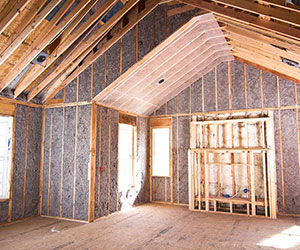
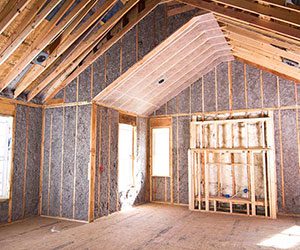
- Stabilized cellulose insulation: Damp-sprayed or mixed with a light adhesive to bind it in place. Used in open wall cavities before drywall goes up.
Where Cellulose Performs Best in a Michigan Home
- Attic floors: Blown-in cellulose reaches Zone 5A targets cost-effectively, provided attic-floor penetrations are air-sealed first.
- Existing walls: Dense-pack cellulose insulation restores cavity R-value without removing drywall. It’s a strong fit for older Grand Rapids housing stock.
- Interior sound control: Cellulose’s density also dampens sound between rooms and floors.
Two Properties That Determine the Match
- Cellulose insulation settling: Loose-fill cellulose can settle over time if the original install was under-dense. Correctly installed density, especially dense pack in wall cavities, controls this. It is an installation variable, not a material flaw.
- Moisture sensitivity: Cellulose must stay dry and relies on correct vapor control and ventilation. This is why choosing the best insulation for a cold humid climate for each space, and installing it properly, matters so much in a Michigan home.
Cellulose vs. the Other Common Materials in Zone 5A
The real question is not which insulation is best. The question what material fits which space in a cold, humid Michigan home.
Fiberglass (Batts and Blown-In)
Fiberglass offers a similar per-inch R-value and cost to cellulose and is non-corrosive. When weighing cellulose vs fiberglass insulation, neither stops air movement on its own, so both must be paired with dedicated air sealing to reach rated performance in a Zone 5A winter.
Spray Foam
Spray foam offers a higher R-value per inch and air-seals as it is applied, but at a higher cost. It is best reserved for rim joists, crawl-space walls, and complex geometries. Learn more about spray foam insulation to see whether it makes sense for your home.
Mineral Wool
Mineral wool is naturally fire-resistant with strong per-inch performance and good sound control. It typically costs more per square foot than cellulose or fiberglass but performs solidly in cold-humid climates.
Rigid Foam Board
Rigid foam board offers a high R-value per inch with good moisture control. It is commonly used as continuous exterior insulation on foundation and basement walls, and at rim joists to break thermal bridging through framing.
The Air-Sealing Point
ENERGY STAR estimates that homeowners save an average of 15% on heating and cooling costs by air-sealing and adding insulation in attics, floors, and basements. Cellulose is not an air barrier by itself, so pairing it with proper air sealing is essential to getting the full benefit.
Frequently Asked Questions
Q: Is cellulose insulation good for cold Michigan winters?
Yes. At R-3.1 to R-3.8 per inch, cellulose insulation for Michigan Zone 5A homes performs well when installed to the recommended attic depth and paired with air sealing. Its density also helps resist air movement through the insulation layer, which is important during long heating periods.
Q: What R-value of cellulose do I need in my Grand Rapids attic?
ENERGY STAR recommends the attic R-value for Michigan attics in zone 5A to be R-49 to R-60 in existing wood-framed homes. Reaching that target requires a meaningful installed depth, which is why professional measurement of installed density matters.
Q: Does cellulose insulation settle, and does that ruin its performance?
Loose-fill cellulose can settle over time, reducing its R-value if the original install was under-dense. It’s important to install it at the correct density to control this.
Q: Is cellulose insulation a fire risk?
No. Cellulose is treated with borate fire retardants and is recognized by the U.S. Department of Energy as a standard residential insulation material. With a borate-treated cellulose fire rating of Class 1, it also helps deter pests. Performance always depends on correct professional installation.
Q: Cellulose vs. fiberglass insulation — which is better for my Michigan home?
They have similar per-inch R-value and cost. Cellulose packs densely, which aids sound control and resistance to air movement. Neither is an air barrier on its own, so both require air sealing in Zone 5A. The better choice depends on the specific space and assembly.
Insulate Your Grand Rapids Home the Right Way
There is no single best insulation for your Grand Rapids home. Yet there is a “best material” for each part of your home, matched to the demands of cold-humid Climate Zone 5A. Cellulose is a strong, cost-effective fit for attic floors and dense-pack wall retrofits when it’s installed to the right density and paired with air sealing.
Whitson Insulation Company has been helping Grand Rapids and West Michigan homeowners get their insulation right since 1978. Our team assesses your home, matches the best material to each space, and installs it correctly every time. We stand behind our work, and we’re not done until you are comfortable and confident in your home’s performance. Contact us today to schedule your free insulation estimate or call us at 616-698-0490.
References
ENERGY STAR. “Methodology for Estimated Energy Savings from Sealing and Insulating.” U.S. Environmental Protection Agency, www.energystar.gov/saveathome/seal_insulate/methodology.
ENERGY STAR. “Recommended Home Insulation R–Values.” U.S. Environmental Protection Agency, www.energystar.gov/saveathome/seal_insulate/identify-problems-you-want-fix/diy-checks-inspections/insulation-r-values.
Michigan Department of Licensing and Regulatory Affairs. “Bureau of Construction Codes.” State of Michigan, www.michigan.gov/lara/bureau-list/bcc.
Michigan State University Extension. “Improving Home insulation for Savings and Comfort: Part 4.” Michigan State University, https://www.canr.msu.edu/news/improving_home_insulation_for_savings_and_comfort_part_4/.
National American Insulation Manufacturers Association. “2015 Michigan Residential Energy Code: Summary of Key Residential Energy Code Requirements.” NAIMA, https://insulationinstitute.org/wp-content/uploads/2025/05/N115-MI-Energy-Code-0425.pdf.
U.S. Department of Energy. “Building America Climate-Specific Guidance.” Office of Energy Efficiency and Renewable Energy, www.energy.gov/eere/buildings/building-america-climate-specific-guidance.
U.S. Department of Energy. “Insulation.” Energy Saver, www.energy.gov/energysaver/insulation.
U.S. Department of Energy. “Types of Insulation.” Energy Saver, www.energy.gov/energysaver/types-insulation.
U.S. Energy Information Administration. “Household Energy Use in Michigan.” EIA,
https://www.eia.gov/consumption/residential/reports/2009/state_briefs/pdf/mi.pdf