
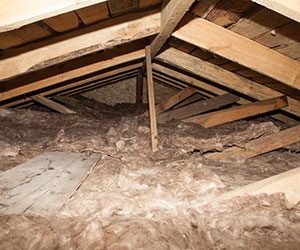
Spring in Michigan brings snowmelt, temperature swings, and rising humidity. While many homeowners focus on landscaping or exterior repairs, the attic is often where winter’s damage quietly lingers. Freeze-thaw cycles, condensation, and months of heavy heating use can leave insulation compressed, damp, or underperforming.
Without proper insulation and air sealing, these seasonal shifts can lead to mold growth, moisture damage, uncomfortable rooms, and higher energy bills. According to the U.S. Department of Energy, heating and cooling account for more than half of a typical home’s energy use, making insulation one of the most impactful improvements a homeowner can make.
Grand Rapids sits in IECC Climate Zone 5A, where cold winters and humid summers make attic insulation and air sealing especially critical. ENERGY STAR recommends attic insulation levels of R-49 to R-60 for homes in Michigan’s climate zones. Spring is the ideal time to inspect your attic for insulation damage, moisture intrusion, settling, and air leaks. Addressing these issues early helps with mold prevention, structural damage, and energy waste throughout Michigan’s extreme seasons.
Not sure where to start? A professional attic inspection can identify hidden issues before they become expensive repairs.
Why Spring Is the Best Time to Check Your Attic Insulation
Seasonal Risks and Winter’s Impact
Spring’s temperature swings and snowmelt create a high risk for moisture intrusion in attics. Michigan’s freeze-thaw cycles can cause condensation on roof decking, which promotes mold growth and wood rot. Insulation may have settled, compressed, or absorbed moisture over the winter months, reducing its effectiveness.
The U.S. Department of Energy recommends that homeowners inspect attic insulation and seal air leaks before adding new insulation. Michigan State University Extension notes that in winter, up to one-third of heat can be lost through an uninsulated or under-insulated attic, while in summer, up to 60 percent of heat gain can occur through the attic.
If your attic insulation has not been checked in several years, spring is the ideal time to evaluate its performance before summer humidity intensifies existing problems.
Understanding Michigan’s Attic Insulation Requirements
R-Values and Climate Zone Context
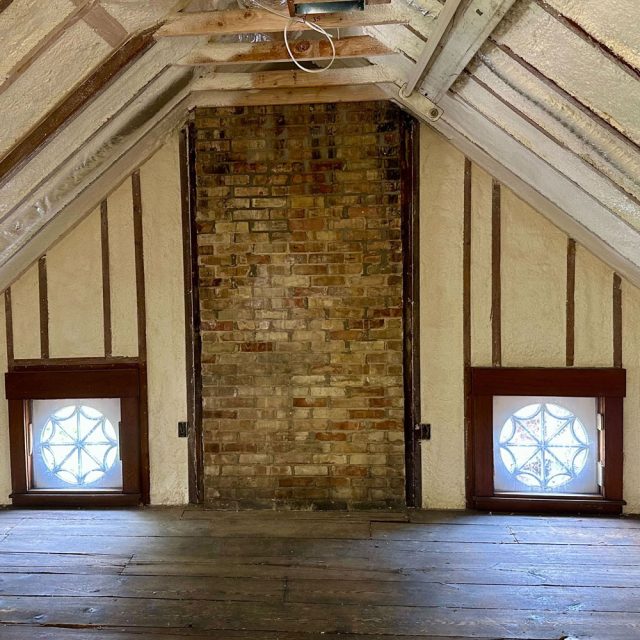 Michigan spans Climate Zones 5A, 6A, and 7, with Grand Rapids in Zone 5A. ENERGY STAR recommends attic insulation levels between R-49 and R-60 for Michigan homes. The Michigan residential energy code, based on the 2015 IECC with state amendments, sets minimum ceiling insulation at R-38 for Zone 5A and R-49 for colder zones.
Many older Michigan homes have attic insulation levels between R-19 and R-30, which fall well below current recommendations. The higher the R-value, the greater the resistance to heat flow. An R-49 attic typically translates to approximately 16 to 18 inches of fiberglass insulation or cellulose insulation.
The Role of Air Sealing
Before increasing insulation levels, air sealing the attic is essential. The Department of Energy’s Building America program identifies attic air sealing as a critical first step, as air leaks can account for 25 to 40 percent of heating and cooling energy use.
Insulation resists heat flow, but without proper air sealing, air escapes through gaps around plumbing stacks, recessed lights, ductwork, and attic access hatches. This phenomenon, known as stack effect, pulls conditioned air out of your home and draws outside air in from lower levels, increasing HVAC energy use.
Combining insulation upgrades with thorough air sealing improves overall energy efficiency and reduces strain on heating and cooling systems. One insulation option, spray foam insulation, offers both air sealing and insulation in a single easy-to-install solution.
Your Spring Attic Insulation Checklist
1. Check Insulation Depth and Condition
Measure current insulation depth and compare it to the recommended R-49 to R-60 levels for Michigan homes. Look for settling, gaps, compression, or displaced insulation, especially around attic access points, pipes, wiring, and floor edges.
If insulation appears damp, flattened, or uneven, it may no longer be performing effectively.
2. Look for Moisture Damage and Mold
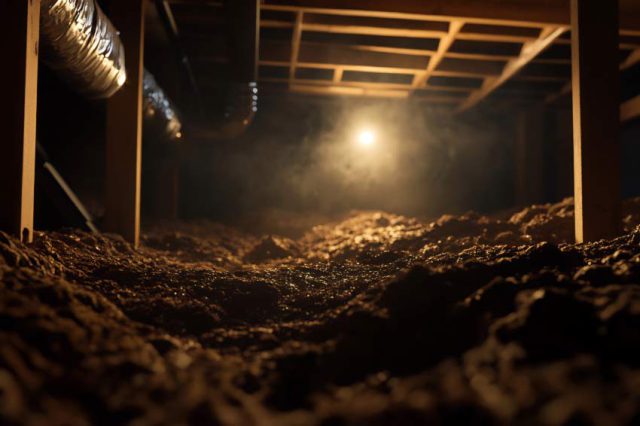 Inspect the roof deck and attic framing for wet areas, dark stains, or visible mold. Michigan’s damp spring weather can easily lead to moisture damage in attic spaces.
Mold growth not only signals a moisture issue but also reduces insulation performance and can affect indoor air quality. Proper moisture control is essential for preventing mold, protecting structural components, and maintaining energy efficiency.
3. Identify Air Leaks
Check for gaps around attic hatches, recessed lighting, plumbing vents, electrical penetrations, and ductwork. Sealing these areas prevents conditioned air from escaping and reduces the stack effect that drives energy loss.
Addressing air leaks before adding new insulation ensures maximum performance from any upgrade.
Choosing the Right Insulation for Your Michigan Attic
Several insulation types work well in Michigan’s climate, depending on your home’s layout and existing conditions.
 Blown-in insulation, such as cellulose or fiberglass, is commonly used in attics because it conforms to irregular spaces and creates a continuous thermal blanket. It can often be added on top of existing insulation to improve overall R-value.
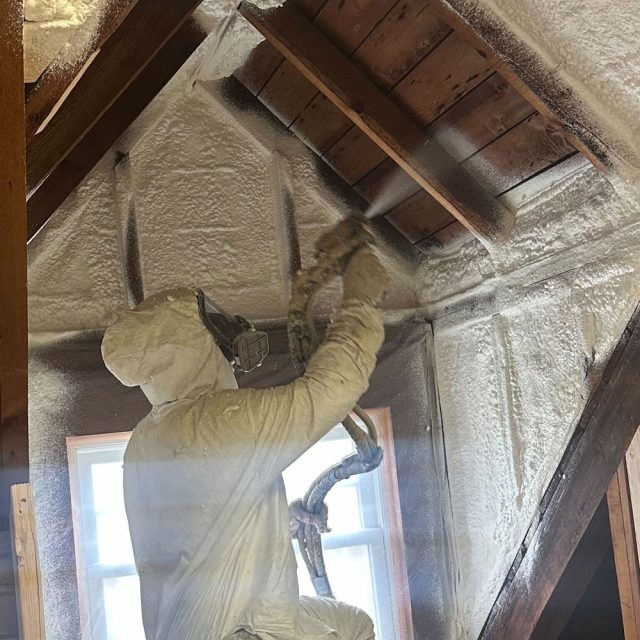
Spray foam insulation provides both insulation and air sealing in one application. Closed-cell spray foam offers a high R-value per inch and can be ideal for sealing complex or hard-to-reach areas.
Loose-fill insulation options are often more cost-effective than batts and can provide complete coverage without gaps when properly installed.
A professional assessment can determine which insulation type best supports your home’s long-term energy efficiency goals, leading to increased HVAC energy savings.
When to Call a Professional
If you discover significant moisture damage, mold growth, structural issues, or widespread insulation failure, professional evaluation is essential. Improperly installed or compressed insulation loses effectiveness and may fail to meet Michigan attic R-value requirements.
An experienced insulation contractor can assess air leakage, verify insulation depth, and recommend improvements aligned with Michigan’s energy code.
Frequently Asked Questions
How often should I check my attic insulation in Michigan?
Inspect your attic at least once a year, ideally in spring after winter weather has passed. Look for settling, moisture, and signs of damage.
What R-value should my Michigan attic have?
ENERGY STAR recommends R-49 to R-60 for Michigan homes, depending on climate zone. This typically equals approximately 16 to 20 inches of fiberglass or cellulose insulation.
Can I add new insulation on top of old insulation?
Yes, in most cases, blown-in insulation can be added over existing material. However, moisture damage, mold, and air leaks should be addressed first.
What is the stack effect, and why does it matter?
Warm air naturally rises and escapes through air leaks in the attic. This pulls outside air into lower levels of the home, increasing heating and cooling demand. According to the DOE, air leaks can account for up to 40% of heating costs. Sealing air leaks and insulating together can reduce heating and cooling costs by up to 15%.
Protect Your Michigan Home This Spring
Spring is the ideal time to address attic insulation issues before summer heat and humidity worsen existing problems. A properly insulated and air-sealed attic protects your home’s structural integrity, improves comfort, and lowers energy costs year-round.
Contact Whitson Insulation Company today to schedule a free estimate. Our experienced insulation contractors have proudly served the Grand Rapids community since 1978.
References:
Michigan State University Extension. “Improving Home Insulation for Savings and Comfort: Part 3.” MSU College of Agriculture and Natural Resources. https://www.canr.msu.edu/news/improving_home_insulation_for_savings_and_comfort_part_3_determining_insula
Michigan State University Extension. “Improving Home Insulation for Savings and Comfort: Part 4.” MSU College of Agriculture and Natural Resources. https://www.canr.msu.edu/news/improving_home_insulation_for_savings_and_comfort_part_4
State of Michigan. “Energy Efficiency in Michigan Homes.” Michigan Department of Environment, Great Lakes, and Energy. https://www.michigan.gov/-/media/Project/Websites/egle/Documents/Programs/MMD/Energy/resources/residential-chklst.pdf
State of Michigan. “Residential Energy Code: Michigan Climate Zone 5a.” Michigan Department of Environment, Great Lakes, and Energy. https://www.michigan.gov/-/media/Project/Websites/egle/Documents/Programs/MMD/Energy/resources/residential-chklst-z5.pdf
U.S. Department of Energy. “Attic Air Sealing Guidelines: Building America Top Innovation.” Office of Energy Efficiency and Renewable Energy. https://www.energy.gov/eere/buildings/articles/attic-air-sealing-guide-building-america-top-innovation
U.S. Department of Energy. “Do-It-Yourself Home Energy Assessments.” Energy Saver. https://www.energy.gov/energysaver/do-it-yourself-home-energy-assessments
U.S. Department of Energy. “Insulation.” Energy Saver. https://www.energy.gov/energysaver/insulation
U.S. Department of Energy. “Where to Insulate in a Home.” Energy Saver. https://www.energy.gov/energysaver/where-insulate-home
U.S. Environmental Protection Agency. “Recommended Home Insulation R-Values.” ENERGY STAR. https://www.energystar.gov/saveathome/seal_insulate/identify-problems-you-want-fix/diy-checks-inspections/insulation-r-values