
Updated January 2026
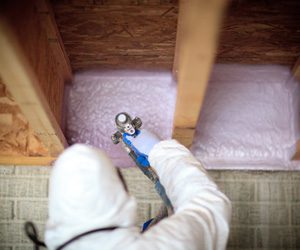
Uninsulated basements can account for 10% to 30% of a home’s total heat loss, making them one of the most overlooked sources of energy waste. One of the biggest culprits is around the basement ceiling between the ceiling joists. These areas are widely recognized as among the leakiest areas in a house. In many Michigan homes, the basement box sill t is thin, poorly insulated, or not insulated at all, allowing outside air to seep in.
During Grand Rapids winters, when January lows hover around 17°F, these gaps accelerate heat loss, make first-floor floors feel icy cold, and force furnaces to work overtime. Insulating and sealing basement box sills eliminates a hidden energy leak that directly affects year-round comfort, efficiency, and long-term durability.
Why Insulating Basement Box Sills Is Critical
What Is a Basement Box Sill?
The box sill is the area between the ceiling joists, where the joists meet the foundation wall along the edge of the basement ceiling. It is the boundary between the indoor living space and the cold or hot outdoor air. This area connects wood framing to concrete, and often contains small gaps from construction penetrations and seams that allow air to pass through.
Air Leakage Problems
In older Michigan homes, gaps in the box sill allow cold outdoor air to leak indoors. Even homes with well-insulated walls and attics can lose significant efficiency if the box sill remains unsealed. Building science research consistently identifies this area as one of the worst offenders of air leakage in the building envelope, leading to disproportionate heat loss through small cracks.
Condensation and Moisture Issues
Wood construction materials around box sills are in direct contact with cold outdoor temperatures. When warm, moist indoor air comes into contact with these cold surfaces, condensation can form. Over time, trapped moisture can lead to mold and mildew growth, wood rot, and compromised structural integrity. Adding insulation without proper air sealing can actually worsen moisture problems if warm air continues to reach cold surfaces.
Pest Entry Points
Small openings around the sill plate or between joists also serve as easy entry points for insects, spiders, and rodents. Sealing and insulating the box sill creates a physical barrier that blocks one of the most common entry points for pests.
A Commonly Overlooked Area
Many Michigan homes lack properly sealed and insulated box sills, relying on loosely stuffed fiberglass that does little to stop airflow. Without proper sealing, homeowners continue losing heat and comfort year after year.
Key Benefits of Box Sill Insulation
Improved Energy Efficiency
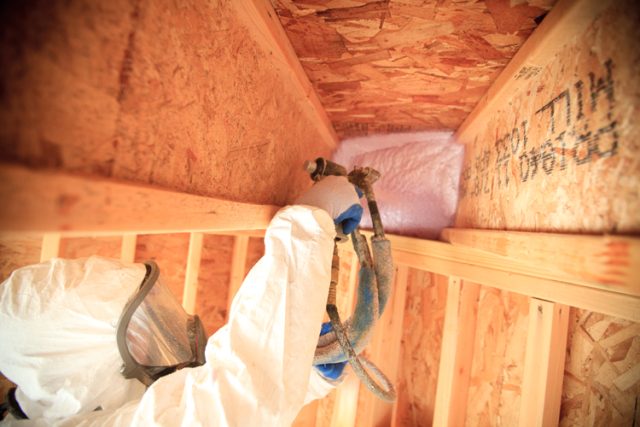 Box sill insulation creates a thermal and air barrier, reducing heat loss in winter and heat gain in summer. With fewer drafts, heating and cooling systems do not have to work as hard, lowering energy bills and reducing wear on furnaces and air conditioners. This one-time upgrade delivers ongoing energy savings and often pays for itself within a few years.
Enhanced Home Comfort
Eliminating foundation-level drafts makes indoor temperatures more consistent throughout the home. Floors feel warmer in winter, cold spots near baseboards disappear, and indoor year-round comfort improves. Cutting off the seeping of outdoor air maintains a more stable indoor climate.
Moisture and Mold Reduction
Air-sealing the box sill insulation prevents moist indoor air from contacting cold surfaces, reducing condensation and the risk of mold and mildew. In a region where basements commonly struggle with moisture, an insulated box sill helps block moisture infiltration and protects surrounding wood from rot and mildew.
Pest Deterrence
When cracks and seams are sealed with foam or caulk, pests lose their easiest entry points. Spray foam insulation, in particular, hardens into an airtight layer that acts as a barrier against pests and rodents, resulting in a cleaner basement and fewer unwanted critters upstairs.
Choosing the Right Insulation Material
Fiberglass Batts
Fiberglass batts are the most affordable and widely available option. Homeowners sometimes install them in box sill cavities, but fiberglass alone does not stop airflow and often fails to fully eliminate drafts in the box sill area. They can serve as insulation, but any gaps must be caulked, and a vapor barrier is needed for moisture control, given Michigan’s humid climate. Fiberglass without air sealing can trap moisture.
Rigid Foam Board
Rigid foam panels, such as XPS or polyisocyanurate, offer better performance with higher R-values, often around R-5 per inch. When cut to fit and sealed at the edges with spray foam or caulk, rigid foam can both insulate and air-seal. They are impermeable to air and moisture, creating an effective barrier. However, fitting boards into uneven cavities is time-consuming, and small air leaks may persist if the installation is not precise. Foam panels can be a cost-effective choice with good insulating power, but may not completely seal leaks.
Spray Foam
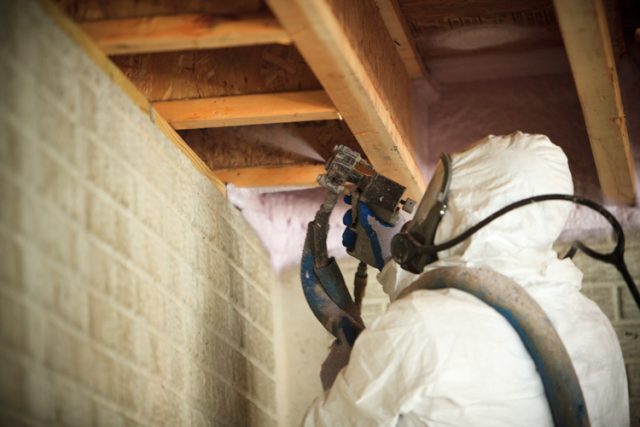 Closed-cell spray foam is widely considered the gold standard for box sill insulation. It provides an airtight seal, a high R-value of around R-7 per inch, and insulation and air sealing in a single application. Spray foam expands to fill irregular shapes, adheres directly to wood and concrete, and adds moisture resistance. While it has a higher upfront cost and typically requires professional installation, it delivers the most reliable long-term performance.
DIY vs. Professional Installation
Ensuring Proper Air Sealing
The most challenging part of box sill insulation is achieving a complete air seal. All gaps must be identified and sealed with caulk or foam before insulation is added. Professional contractors know where leakage points hide and use specialized equipment to fill cracks that homeowners often miss. Even small gaps left unsealed can create noticeable drafts.
Handling Materials Safely
Insulation materials also pose safety considerations. Cutting rigid foam requires proper tools and protective gear. Spray foam can be hazardous if mishandled and is extremely difficult to remove once applied. Professional installers ensure the work meets building code and fire safety requirements, reducing the risk of costly mistakes.
Quality and Efficiency
A professional crew can typically insulate and seal an entire basement rim in a fraction of the time it would take a homeowner. With commercial-grade equipment, they deliver consistent, high-quality results quickly. Insulation is a job that must be done correctly and completely, as any gaps left unsealed could diminish benefits. Many experts recommend leaving complex insulation projects to trained professionals.
Cost and Return on Investment
Cost Factors
The cost of box sill insulation varies based on basement size, the number of sill cavities, and the insulation material used. Spray foam typically has the highest upfront cost, rigid foam falls in the middle, and fiberglass is the least expensive option.
A Valuable Investment
While there is an initial cost, box sill insulation is an investment in comfort and efficiency. Homeowners begin saving on heating and cooling immediately, and insulation often pays for itself through reduced energy bills.
Proper insulation can also improve resale appeal, reduce wear on HVAC systems, lower maintenance needs, and enhance overall quality of life.
Budget-Friendly Options
For homeowners on a tight budget, a phased approach can still deliver benefits. Sealing box sills now, adding insulation where possible, and upgrading to spray foam later is far better than leaving the area untreated. Even partial improvements reduce energy waste and improve year-round comfort. Every bit of heat you keep inside is energy (and money) you’re not wasting. Most homeowners find that basement insulation upgrades are one of the highest-return projects they can do for their home.
Maintenance and Upkeep
One advantage of basement box-sill insulation is that it requires very little ongoing maintenance. Once properly installed, insulation does not wear out and can perform effectively for decades. Occasional inspections are usually all that’s needed to ensure everything remains in good condition.
Every year or two, take a brief look at your box sills. In finished basements, this may mean checking above a drop ceiling or accessing utility areas. In unfinished basements, inspect along the perimeter where the framing meets the foundation. Watch for any signs of moisture staining or mold and mildew, which could indicate a new water issue that should be addressed promptly.
If spray foam or caulk was used, confirm that it remains firmly bonded to the wood and concrete, which is typical when installed correctly. For fiberglass installations, check that the insulation has not sagged or shifted and reseal any gaps if needed.
Pest activity is another indicator to monitor. A well-sealed basement box sill should prevent rodents from entering, but if you notice droppings or chewed material, it may indicate that the barrier needs reinforcement.
Whenever new wiring, plumbing, or cable lines are added through the box sill, make sure the contractor seals the penetration with foam or caulk afterward. Leaving even small gaps can compromise the air seal. By keeping the box sill area sealed and dry, your insulation will continue to perform at its best.
Conclusion

Insulating your basement box sills and rim joists is one of the smartest upgrades you can make for a Michigan home. It improves home comfort, reduces energy costs, controls moisture, and protects your home for the long term.
For best results, work with a qualified local contractor who understands Michigan’s climate and building codes. Contact Whitson Insulation today to schedule your basement insulation consultation and start enjoying a warmer, more comfortable home this season.
References:
Big Rapids Township. (2011, April). Michigan uniform energy code. Big Rapids Township, MI. https://bigrapidstownshipmi.gov/wp-content/uploads/2022/01/MI-UNIFORM-ENERGY-CODE-Apr-2011-.pdf
Building Science Corporation. (n.d.). Information sheet 408: Critical seal (spray foam at rim joist). Energy Star. https://www.energystar.gov/sites/default/files/asset/document/BSC%20Information%20Sheet%20408%20Critical%20Seal%20%28Spray%20Foam%20at%20Rim%20Joist%29.pdf
Michigan State University Extension. (n.d.). Improving home insulation for savings and comfort part 4. MSU College of Agriculture and Natural Resources. https://www.canr.msu.edu/news/improving_home_insulation_for_savings_and_comfort_part_4
North Dakota State University Extension. (2008, December 11). Rim joists can be source of energy loss. NDSU Agriculture. https://www.ag.ndsu.edu/news/newsreleases/2008/dec-11-2008/rim-joists-can-be-source-of-energy-loss